The expert blog 5116
High winds do their work in minutes. Cleanup can take days, sometimes weeks, and the decisions you make in the first 24 hours set the tone for the whole recovery. I have walked countless properties the morning after a storm, dew still on the grass and branches everywhere, hearing the distant thrum of chainsaws and the pop of a generator sputtering back to life. It is a moment for steady judgment. Move too fast, and you get hurt. Move too slow, and small problems turn expensive.
This guide lays out what to do after a wind event, with particular attention to tree damage and the order of operations that protects your home, your wallet, and your sanity. The advice holds whether you live under maples on a Akron cul‑de‑sac or on a rural lot lined with ash and pine.
The first pass: slow, methodical, cautious
Start with a safety sweep. Keep children and pets inside. Scan the area from a distance before you step into it. Downed power lines are not always easy to spot and can energize wet ground or fences. If you see a line on the ground, draped in a tree, or arcing on a metal roof, stop and call your utility or 911. A wire that seems quiet can still be lethal. The same goes for gas. If you smell sulfur or hear a hiss, leave quickly and call the gas company from outside.
Wind damage is sneaky. It hides in the rafters and in root plates. A tree that leaned three inches yesterday might lean two feet tomorrow when the soil softens in the rain. Roof shingles can lift without blowing off, then leak in the next storm. Take notes, take photos, but avoid impulsive cutting until you have a clear picture.
I keep a simple triage routine: safety risks first, water entry second, access and utilities third, everything else last. If you have roof damage and rain in the forecast, a quick tarp job buys time. If your driveway is blocked and someone needs medical care, that is your focus. Everything else can wait a few hours.
A practical storm damage cleanup checklist
Use this as a compact, field-ready sequence. If any item feels unsafe, stop and bring in a professional.
- Verify safety: check for live wires, gas leaks, and unstable structures. Keep clear of any tree still moving, hung up in another canopy, or resting on a roofline. Stabilize the home: shut off water if a pipe burst, cover roof openings with a tarp, board broken windows from the outside if you can do so without standing under broken limbs. Document thoroughly: capture wide shots to show context, then close‑ups. Time stamp your photos. Save short videos of any active leaks. Clear essential access: create safe, narrow paths to exits, vehicles, and the street. Stage larger debris out of the traffic zone instead of fully processing it on day one. Call the right help: notify insurance, your utility, and a reputable tree service for hazardous work. For significant canopy damage in Summit County, look for established tree service Akron providers familiar with local species and soil conditions.
Keep this list handy, but remember it is a guide, not a dare. I have been on sites where item one is the only step that happens that day, and that was the right call.
Reading the trees: how to assess wind damage without getting hurt
Trees fail in different ways during high winds. Some snap cleanly. Some peel long, dangerous splinters called barber chairs. Others crack high in the crown where you cannot see it from the ground. The most deceptive case is root failure. You will notice a raised hummock on the windward side of the trunk, sometimes a crescent of cracked soil, and a subtle lean that was not there last week. That tree is at risk even if it is not touching anything today.
Look for broken branches that did not fall all the way. Arborists call them hangers. They lodge in neighboring limbs and come down later, often after the storm when people are relaxing in the yard. Resist the urge to tug them down with a rope from right underneath. A hanger can kick, pivot, and strike with real force. A professional tree service has the rigging gear to control that release from a distance.
Pay attention to what the tree is leaning on. If a trunk is resting against a gutter or ridge cap, do not cut at the base. The load above will shift and roll. We use cranes, winches, and controlled cuts because gravity is unforgiving. I have seen homeowners make a back cut on a leaning pine, only to have the butt kick off the stump and slide right into a living room. With tree removal, planning is half the job.
If the canopy looks intact but leaves are suddenly wilting on one side, that can signal a cracked limb or partially severed cambium. Mark it for a closer look later. Sometimes the right call is pruning and cabling to preserve structure instead of full tree removal. A seasoned crew can evaluate wind firming options, like crown reduction cuts that reduce sail area or through‑bolt systems that tie split leaders together.
Where DIY ends and a professional starts
I am not against homeowner effort. A sharp bow saw, a pair of loppers, and common sense go a long way. But there are bright lines that separate safe DIY from the kind of work you should hire out.
Chainsaws, ladders, and windfall wood do not mix well. The pressure locked into a bent limb can pinch a bar, spring a cut closed, and sweep your legs in an instant. Cutting above shoulder height turns a manageable task into a head injury risk. Working off a ladder while sawing is a common route to the emergency room. The industry joke is that ladders and chainsaws should never meet, and it is a joke told with scars.
Utility proximity is another line. If a branch is within a few feet of a service drop, do not touch it. Even if the line is insulated, your tools are not. If a tree has compromised your main electrical mast, you will need coordination between a licensed electrician, the utility, and often a tree removal crew to make it safe to work.
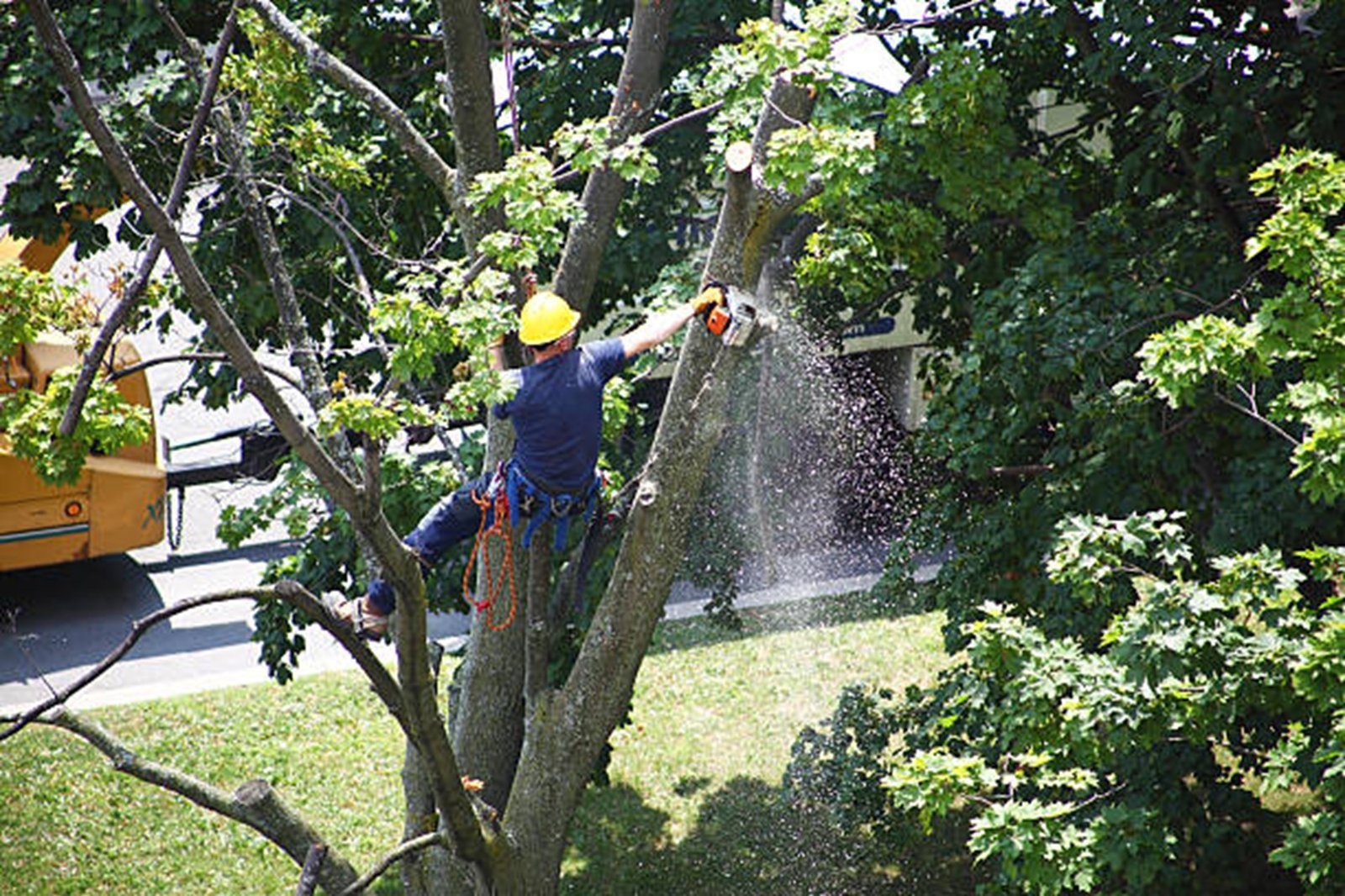
Then there is sheer mass. Logs weigh more than people guess. Green oak runs around 45 to 55 pounds per cubic foot. A 10‑foot section of 18‑inch diameter trunk easily tops 600 pounds. That is why we rig with blocks, ropes, and friction devices to move pieces under control, not muscle them. For multi‑ton removals or trees over houses, look for tree removal Akron teams with cranes or knucklebooms and a record of clean, damage‑free work in tight residential spaces.
Making sense of debris without making a mess
Debris triage is not glamorous, but it pays off. I like to begin by defining lanes. One lane for foot traffic to doors and vehicles, one lane where we stage cut material, and one protected area for salvageable items like patio furniture. If someone is cutting while another person is dragging, set a buffer zone. No one enters the cut zone while a saw is running.
Cut smaller branches first to expose the structure of larger pieces. If you work a log trapped under branches, it will roll as tension releases. Watch for limbs under compression and tension. A quick field test is to nick the wood on the compression side and see if the kerf opens or closes; cut from the opposite side to avoid a pinch. Stack brush with butt ends facing the same direction. It makes loading easier and reduces tripping hazards.
Separate your materials. Green brush, logs, and dimensional scraps should be in different piles if your city or hauler requires it. Many municipalities schedule storm debris pickups after major events, but the rules vary. Akron has historically communicated storm collection details through the city website and local news after significant weather. Expect size limits, bundle requirements, or designated drop sites. If service announcements are silent, call your waste provider before you drag everything to the curb.
If you plan to keep wood for firewood, keep in mind that freshly cut hardwood needs 6 to 18 months to season depending on species and split size. Stack it off the ground with airflow on both sides, top covered, sides open. Do not stack it against your house. Termites and rot like a tight, damp pile.
Tarping, temporary fixes, and what not to touch
Tarping a roof is a stopgap, not a repair, but a good stopgap can prevent thousands in interior damage. Use a thick, woven tarp, not the thin blue one meant for picnics. Extend it a few feet past the damaged area and lap shingles correctly so water sheds off, not under. Mechanical fasteners work better than adhesive alone. Simple batten boards screwed into rafters or decking edges spread the load and protect the tarp from tearing. If you are stepping on a roof that may have hidden fractures or soft decking, rope in and use a harness, or stay off it. A professional can be on site with fall protection the same day after most storms.
Do not remove tar or tree weight from a bowing roof beam until someone qualified assesses the load path. Structures settle into new shapes under load. Taking weight off one point can cause another to shift. I have seen ceilings fall when someone yanked a branch to see what moved.
Windows with cracked panes but intact frames can be weathered in from the outside with plywood cut to fit. Use proper length screws and ensure you are not driving fasteners into window sashes or trim you will need to remove later. If broken glass is under tension, wear gloves and eye protection when clearing the area.
Insurance, documentation, and getting the paper right
Documentation begins before you touch anything. Wide photos show location and scale. Close‑ups show severity. Put a coin, tape measure, or your gloved hand in shots to provide scale. Capture where the tree came from, not just where it landed. If the origin tree is on a neighbor’s property, take a shot that shows the property line if possible. Videos help for active leaks or if wind is still gusting and moving branches.
Call your insurance carrier early, then keep a log of every conversation. Date, time, who you spoke with, and what was said. If you hire emergency services like tarping or a partial tree removal to make the property safe, get a written estimate and request that the crew capture their own before and after photos. Most carriers will reimburse reasonable emergency mitigation even before a formal claim inspector arrives.
Permits vary. In many Ohio municipalities, you can remove a hazardous tree on private property without a permit, but you may need approval for work in a public right of way, near sidewalks, or for crane operations that require road closure. A reputable tree service Akron provider handles those approvals as part of the job when needed. If a contractor asks you to pull a questionable permit under your name to speed things up, that is a red flag.
Choosing the right tree service when everyone is busy
Storm weeks bring out the best crews and a few opportunists. The phone rings off the hook, and there is pressure to say yes to the first person with a chainsaw. Take five minutes to vet. Ask for a certificate of insurance with your name and address listed as certificate holder. That document should show current general liability and worker’s compensation coverage. If the company hesitates, move on.
Experience matters when wood is on a roof. Ask how they plan to remove it. A thoughtful answer mentions rigging points, load distribution, the possibility of portable winches or cranes if access allows, and a cleanup plan that protects gutters and landscaping. If a bid sounds too cheap compared to others, ask what is not included. I have seen low bids that cover only cutting, not cleanup, stump work, or disposal. That can double your final cost.
Local familiarity is more than a slogan. Tree removal Akron crews work the same heavy snows, lake effect gusts, and clay soils you do. They know how shallow roots behave after saturated weeks in April and what species snap versus bend. A company that does both pruning and removals has more tools to preserve a valued tree if it is savable. When removal is necessary, ask about stump options. Full stump grinding to 6 to 12 inches below grade allows you to replant or lay sod. Some providers write it as stump grinding, others as stump griding on invoices. Either way, get the depth and cleanup in writing.
What cleanup really costs, and how to keep it reasonable
Prices swing with access, complexity, and urgency. A simple curbside pickup of cut brush may be a few hundred dollars. Removing a 60‑foot oak that is resting on a roof with limited access can run into the thousands, especially if a crane is required. Weekend or after‑hours emergency rates are higher, but sometimes waiting until daylight is both safer and cheaper if the situation is stable and not exposing the interior of the home.
You can manage cost by doing the safe, low‑skill tasks yourself. Stage brush at the curb if your city is picking up storm debris. Pull nails and stack intact fence panels for later repair rather than letting a crew toss them. The key is to avoid doing partial, risky work that makes the professional job harder. For example, do not cut a trunk into short, tipped dominoes that are now harder to grasp with equipment.
Ask for options. Many crews can price the job in tiers: emergency removal to clear the roof today, full cleanup tomorrow, and stump removal later. That spreads cost and keeps essential work front loaded.
Hidden damage you will kick yourself for missing
Storm aftermath is tiring, and that is when details slip. I have a short mental list of things to check that do not jump out at first glance.
Gutters and downspouts often fill with leaves and twigs that look cosmetic but cause overflows at the next rain. Clear them once, then check the ground below for any separated drain tiles or crushed splash blocks. Open window wells collect debris and then flood basements, especially on the tree service windward side. Sump pump discharge lines can come loose when branches drag across them. Verify the line is still connected and flowing away from the foundation.
Fences lean subtly after root balls nudge posts. Sight down the line from end to end. If a section leans 2 inches today, it can lean 6 inches after a few wet weeks. Resetting a post now is easier than replacing a panel later. Check HVAC condensers for bent fins or lodged debris. A cheap fin comb and a garden hose restore a lot of efficiency.
On the roof, lifted shingles can reseal under sun and warmth, but some never do. From the ground with binoculars, look for lines that are not straight, tabs that flutter in the breeze, or dark spots where granules scuffed off. If you are unsure, a roofer can do a quick inspection. A three‑figure check today beats a five‑figure interior repair next season.
Tools that earn their space in a storm bin
It helps to prepare before the wind picks up. You do not need a truck full of gear to manage the first 24 hours. A small kit makes a big difference.
- PPE first: leather gloves, safety glasses, hearing protection, a hard hat, and high‑visibility vest or jacket. Hand tools: a folding saw, bypass loppers, a sturdy rake, a flat pry bar, and a utility knife with spare blades. Temporary protection: a heavy tarp, batten boards, exterior screws, duct tape, and a staple gun. Lighting and power: a headlamp, two flashlights, spare batteries, and a small power bank for phones. Marking and measurement: bright flagging tape, a tape measure, and sidewalk chalk to outline hazards.
This kit stays useful even if you hire out most of the heavy work. PPE keeps you safe while you document, flag, and coordinate.
After the chainsaws leave: finishing touches that matter
The best crews leave a site tidy, but final polish often falls to the homeowner. Rake the lawn again after a day or two. You will find small shards and fasteners that turn up after traffic settles the surface. Walk the yard with a magnet on a stick if any roof or fence hardware spilled. Fill rut lines from equipment with topsoil while the ground is still soft, then tamp lightly. Seed bare spots right away if the season allows.
If stump removal was part of the work, ask what the crew did with grindings. Fresh grindings are acidic and not ideal for planting beds. Rake them off to a thin layer and blend with compost if you plan to replant the spot. Water the area to settle the soil. For replanting, choose wind‑firm species. Oaks with strong branch structure, bald cypress in wetter spots, and serviceberry for small ornamental needs all hold up well in Ohio storms. Space trees with mature size in mind, and keep 15 to 20 feet between large canopies to reduce interlocking branches that create sail.
Schedule a pruning cycle for the rest of your trees. A light structural prune every 3 to 5 years on young trees builds stronger unions and reduces future breakage. Deadwood removal on mature trees lowers the chance of hangers. If you work with a regular provider, ask for a health report. A relationship with a reputable tree service means someone who knows your property can prioritize work and spot trends before they turn into emergencies.
Planning for the next wind event
Storms are not one‑offs. In our region, spring brings saturated soils and gusts that test root structures, summer delivers microbursts with sideways rain, and fall can whip leaves into sails just before first frost. Adapt your property accordingly.
Keep trees mulched properly, 2 to 3 inches deep, pulled back from the trunk flare. Good mulch reduces mower strikes and conserves moisture, both of which keep trees healthier and more resilient in wind. Avoid volcano mulching that buries the flare and invites rot. Water deeply during droughts. Stressed trees fail more readily.
Secure what becomes a projectile. Patio umbrellas, trampolines, and lightweight furniture need anchors or to be moved indoors before a storm. Check fence gates for self‑latching hardware that will not slam in the wind and work its hinges loose. Trim or secure loose flashing on sheds. Label your gas and water shutoffs clearly and show household members how to use them.
If you added a generator after this storm, store fuel safely and run it monthly for a few minutes to keep the carburetor clean. Position it with exhaust pointed away from windows, even cracked ones. Carbon monoxide is silent. If you plan to hard‑wire a generator, have a licensed electrician install a transfer switch. Backfeeding a panel is not a DIY move.
When removal is the right call
People get attached to trees, and rightly so. Shade, beauty, and decades of growth create a bond. But some trees should not stay. A trunk with a crack you can slide a coin into, a major leader split that compromises more than 30 percent of the canopy, a root plate that heaved and left a void, or a tree that now leans toward a high‑value target are all candidates for removal. Certain species fail in particular ways. Soft maples are quick growers with brittle wood. Silver maples especially get long, heavy laterals that tear in wind. Norway maples often have included bark at unions that pry apart over time. On the other hand, a white oak with one broken limb might be a perfect case for a careful reduction and a long future.
For removals, ask about disposal. Some crews can mill larger logs into slabs, a nice way to honor a beloved tree. Others chip everything. Chips are great for paths and beds if you have space. If you prefer a clean lawn again, specify haul‑away. Confirm whether the bid includes stump services. Stump grinding, sometimes appearing on bids as stump griding, should specify depth, backfill, and whether surface roots will be traced and ground too.
The human side of storm work
After a long day of storm cleanup, I have seen neighbors share tools, carry brush together, and look out for folks who were overwhelmed. A block that coordinates piles and keeps the street clear for trucks gets work done faster. If you have a spare cold drink to hand a sweaty crew member, do it. These are the days when small gestures matter.
Just as important, pace yourself. Adrenaline fades, then fatigue sets in. Eat, hydrate, and take breaks. It is easy to make bad choices at dusk when you are pushing to get one more thing done. Leave the last cut for the morning. The tree will still be there.
A steady path forward
High winds remind us what we can control and what we cannot. You cannot stop the gust that toppled the maple. You can choose a methodical response that protects your safety and your home, enlists the right help, and sets you up stronger for the next round. Walk your property with a clear head. Use the checklist. When the job calls for it, call a professional who treats your home like their own. For those in and around Summit County, established tree service Akron teams can bring cranes, ropes, and know‑how to the worst tangles. Whether your path leads to careful pruning, full tree removal, or stump grinding and replanting, the goal is the same, a safe yard that feels like home again.
Address: 159 S Main St Ste 165, Akron, OH 44308
Phone: (234) 413-1559
Website: https://akrontreecare.com/
Hours:
Monday: Open 24 hours
Tuesday: Open 24 hours
Wednesday: Open 24 hours
Thursday: Open 24 hours
Friday: Open 24 hours
Saturday: Open 24 hours
Sunday: Open 24 hours
Open-location code: 3FJJ+8H Akron, Ohio Map/listing URL: https://www.google.com/maps/place/Red+Wolf+Tree+Service/@41.0808118,-81.5211807,16z/data=!3m1!4b1!4m6!3m5!1s0x8830d7006191b63b:0xa505228cac054deb!8m2!3d41.0808078!4d-81.5186058!16s%2Fg%2F11yydy8lbt
Embed:
https://akrontreecare.com/
Red Wolf Tree Service provides tree removal, tree trimming, stump grinding, storm cleanup, and emergency tree service for property owners in Akron, Ohio.
The company works with homeowners and commercial property managers who need safe, dependable tree care and clear communication from start to finish.
Its stated service area centers on Akron, with local familiarity that helps the team respond to residential lots, wooded properties, and urgent storm-related issues throughout the area.
Customers looking for help with hazardous limbs, unwanted trees, storm debris, or overgrown branches can contact Red Wolf Tree Service at (234) 413-1559 or visit https://akrontreecare.com/.
The business presents itself as a licensed and insured local tree service provider focused on safe workmanship and reliable results.
For visitors comparing local providers, the business also has a public map listing tied to its Akron address on South Main Street.
Whether the job involves routine trimming or urgent cleanup after severe weather, the company’s website highlights practical tree care designed to protect homes, yards, and access areas.
Red Wolf Tree Service is positioned as an Akron-based option for people who want year-round tree care support from a local crew serving the surrounding community.
Popular Questions About Red Wolf Tree Service
What services does Red Wolf Tree Service offer?
Red Wolf Tree Service lists tree removal, tree trimming and pruning, stump grinding and removal, emergency tree services, and storm damage cleanup on its website.
Where is Red Wolf Tree Service located?
The business lists its address as 159 S Main St Ste 165, Akron, OH 44308.
What areas does Red Wolf Tree Service serve?
The website highlights Akron, Ohio as its service area and describes service for local residential and commercial properties in and around Akron.
Is Red Wolf Tree Service available for emergency work?
Yes. The company’s website specifically lists emergency tree services and storm damage cleanup among its core offerings.
Does Red Wolf Tree Service handle stump removal?
Yes. The website includes stump grinding and removal as one of its main tree care services.
Are the business hours listed publicly?
Yes. The homepage shows the business as open 24/7.
How can I contact Red Wolf Tree Service?
Call (234) 413-1559, visit https://akrontreecare.com/.
Landmarks Near Akron, OH
Lock 3 Park – A well-known downtown Akron gathering place on South Main Street with year-round events and easy visibility for nearby service calls. If your property is near Lock 3, Red Wolf Tree Service can be reached at (234) 413-1559 for local tree care support.
Ohio & Erie Canal Towpath Trail (Downtown Akron access) – The Towpath connects downtown Akron to regional trails and green space, making it a useful reference point for nearby neighborhoods and properties. For tree service near the Towpath corridor, visit https://akrontreecare.com/.
Akron Civic Theatre – This major downtown venue sits next to Lock 3 and helps identify the central Akron area the business serves. If your property is nearby, you can contact Red Wolf Tree Service for trimming, removal, or storm cleanup.
Akron Art Museum – Located at 1 South High Street in downtown Akron, the museum is another practical reference point for nearby residential and commercial service needs. Call ahead if you need tree work near the downtown core.
Stan Hywet Hall & Gardens – One of Akron’s best-known historic destinations, located on North Portage Path. Properties in surrounding neighborhoods can use this landmark when describing service locations.
7 17 Credit Union Park – The Akron RubberDucks’ downtown ballpark at 300 South Main Street is a strong directional landmark for nearby homes and businesses needing tree care. Use it as a reference point when requesting service.
Highland Square – This West Market Street district is a recognizable Akron destination with shops, restaurants, and neighborhood traffic. It is a practical area marker for customers scheduling tree service on Akron’s west side.
